You may have noticed some people beginning to use the term PMOS (Polyendocrine Metabolic Ovarian Syndrome) instead of PCOS. PCOS remains widely used in research, healthcare and everyday conversation, so throughout this article I’ll use PCOS, while recognising the evolving terminology.
Stress has become a normal part of our everyday lives.
A constant drip of uncertainty. Emails. Notifications. Other people's opinions. Advertisements. Finances. Work. Family. The endless stream of do this, don't do that...
Our brains and bodies weren't designed to process this much information, all day, every day.
And if you have PCOS, navigating all of this can sometimes feel even harder.
PCOS isn't simply a condition that affects your periods. It can affect many areas of your life, including your physical health, emotional wellbeing and quality of life. Psychological difficulties, including anxiety and depression, are also recognised as important concerns for people living with PCOS.
So if you've ever thought:
"Why am I finding everything so overwhelming?"
"Why can't I switch off?"
"Why does my body feel like it's constantly on high alert?"
You're not alone.

PCOS and stress: recognising what's happening
Before we can manage stress, we need to recognise it.
This sounds simple but how often do we actually stop and ask ourselves:
"Am I stressed right now?"
We can become so caught up in our routines that we don't even realise we're stressed until our body starts shouting at us.
Maybe you're struggling to sleep. Maybe you're constantly checking your phone. Maybe you're feeling irritable or overwhelmed.
Maybe you're pushing through because you feel like you should be able to cope.
Stress is an individual experience. What feels stressful to one person might not feel stressful to another. And we all respond to stress differently.
That's why there isn't one perfect way to manage stress with PCOS.
Instead, it's about learning to recognise your own patterns and finding strategies that work for you.
The PCOS stress cycle
When we're stressed, our bodies respond.
Our heart rate can increase. Our muscles can tense. Our breathing can change. Hormones such as adrenaline and cortisol are released as part of the body's stress response.
This response is completely normal and can be helpful when we need to respond to a genuine threat.The problem can come when we feel like we're constantly switched on.
You finish work and immediately start scrolling.
You see something online that makes you worry about your health.
You remember something you forgot to do.
You start thinking about tomorrow.
You check your emails one last time.
And suddenly it's midnight, you're exhausted, but your brain is still going.
This is why I think it's so important to understand your own stress patterns.
Rather than asking, "How do I get rid of stress?", try asking:
"What does stress look like for me?"
Once you can recognise your patterns, you can start to do something about them.

5 simple ways to manage stress with PCOS
Here are five simple strategies you can try when you're feeling overwhelmed.
1. Take a breath
It may sound cliché, but sometimes the simplest things really can help.
When you feel overwhelmed, stop what you're doing and take a moment to breathe.
One technique you could try is box breathing:
Breathe in for 4 seconds → hold for 4 → breathe out for 4 → hold for 4.
Repeat this a few times and notice how you feel.
The aim isn't to magically make your stress disappear.
It's about creating a pause.
Sometimes we become so caught up in whatever is happening that we immediately react without giving ourselves time to think.
Taking a few minutes away from a situation and returning to it with a clearer head can be surprisingly helpful.
And if structured breathing doesn't feel comfortable for you, that's okay. Simply slowing your breathing down and taking a few calm, deliberate breaths can give you that moment of pause.

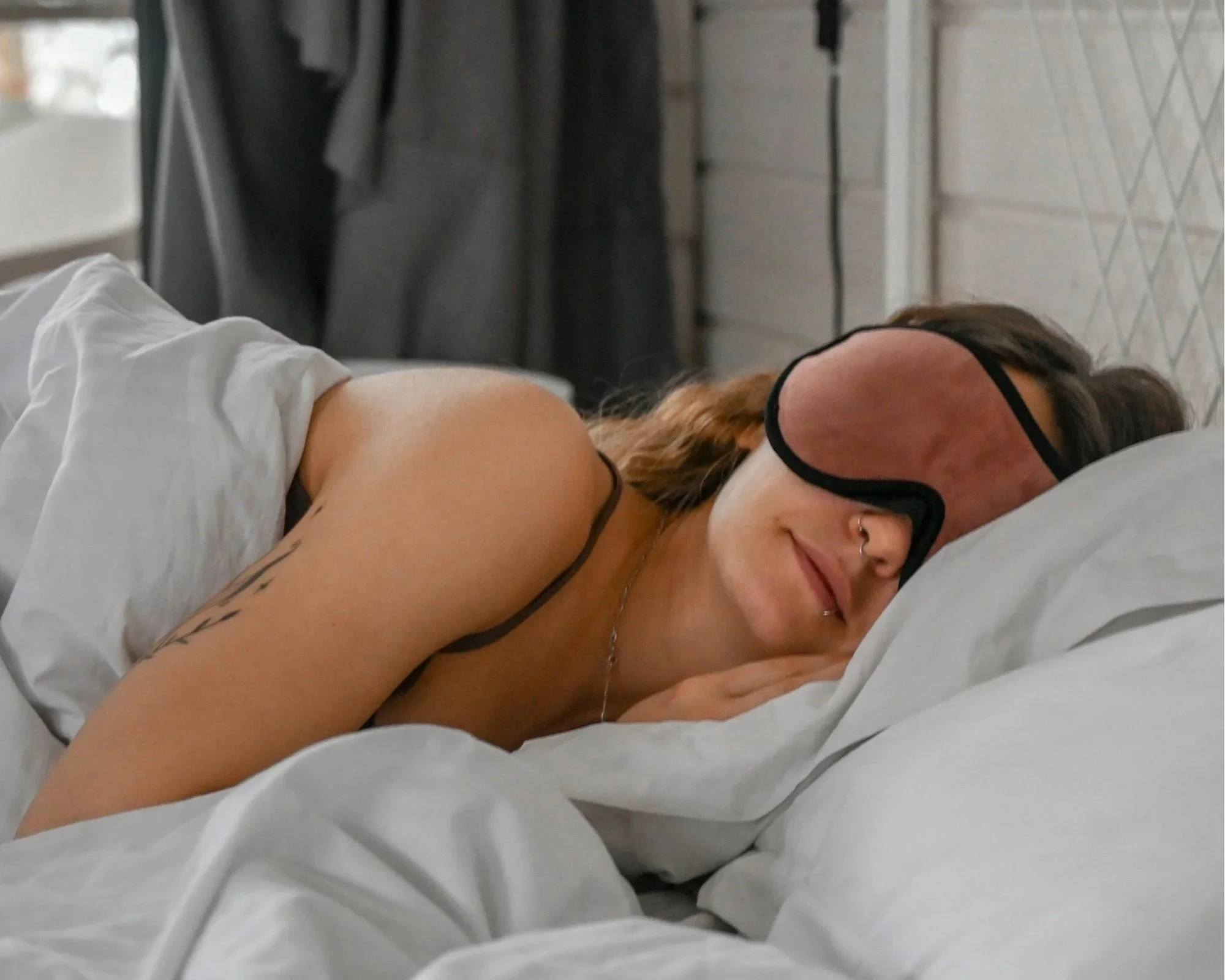
2. Limit screen time before bed
How often do you get into bed, tell yourself you'll have a quick scroll, and then suddenly it's an hour later?
We've all done it.
When you have PCOS, social media can be particularly difficult because you're constantly exposed to other people's bodies, lifestyles, diets, routines and opinions.
You can easily find yourself comparing your body, your health or your progress with somebody else's highlight reel.
And that's before we even consider the constant stimulation from our phones.
Your brain is receiving information right when you're supposed to be winding down.
So try creating a small screen-free period before bed.
It doesn't have to be two hours.
Start with 30 minutes.
Read a book. Journal. Stretch. Listen to music. Have a cup of (decaf) tea.
Or simply lie in bed and do absolutely nothing.
Give your brain a chance to transition from doing to resting.
If you regularly struggle with sleep or experience significant daytime tiredness, speak to your GP or healthcare professional, as sleep difficulties can be an important part of PCOS care.
3. Be mindful of caffeine
Coffee lovers, don't panic.
I'm not here to tell you that you can never drink coffee again.
Caffeine is a stimulant, and some people find that it can make them feel more alert, restless or anxious, particularly if they're already feeling stressed.
It can also interfere with sleep for some people, especially when consumed later in the day.
The important thing is to notice how caffeine affects you.
Ask yourself:
How much caffeine am I having each day?
What time am I having my last caffeinated drink?
Does caffeine make me feel more anxious or jittery?
Is it affecting my sleep?
You don't necessarily need to cut caffeine out completely.
Instead, try experimenting.
If you normally have a coffee at 4pm and struggle to sleep, try moving your last caffeinated drink earlier and see whether you notice a difference.
Managing stress isn't about following a list of rules perfectly.
It's about learning what works for your body.

4. Be kind to yourself
This might be one of the most important things on the list.
When you live with PCOS, it can sometimes feel like your body is constantly giving you another problem to solve.
Maybe your periods are irregular. Your skin changes. Your weight changes. Your energy changes. You're trying to eat well.
It can become exhausting. And suddenly self-care becomes another thing you feel like you're failing at.
So give yourself a break. Be kind to yourself.
You don't have to have everything figured out. Do something simply because you enjoy it.
Go for a walk. Have your favourite drink. Watch a film. Listen to music. Read a book. Sit outside. Call a friend.
You don't always have to make something productive.
Sometimes doing something purely because it makes you feel good is enough.

5. Ask for help
Sometimes the hardest thing to do is admit that you're struggling.
You might feel like you should be able to cope.
You might worry about being a burden.
Or perhaps you've had experiences where you haven't felt listened to or understood when seeking help for your PCOS.
But asking for support isn't a weakness. It's a strength.
Ask a friend or family member to take something off your plate.
Tell your partner that you need them to listen rather than offer solutions.
Speak to your GP or another healthcare professional.
Or simply sit down with someone you trust and say: "I'm finding things a bit difficult at the moment."
You don't have to carry everything yourself.
PCOS can be physically and emotionally challenging, and you deserve support with both.
If you're experiencing persistent anxiety, low mood, hopelessness or you're struggling to cope, please speak to a qualified healthcare professional.
If you'd like support in understanding your own stress patterns and managing PCOS alongside your everyday life, you can find out more about my PCOS coaching here.

You don't have to eliminate stress
Stress is unavoidable. There will always be emails. There will always be responsibilities. There will always be difficult days.
And managing stress with PCOS doesn't mean becoming perfectly calm, perfectly healthy and perfectly balanced.
Instead, it's about learning to recognise your patterns.
What makes you feel stressed?
What does stress look like in your body?
What happens when you're overwhelmed?
What actually helps you feel better?
Small changes can make a big difference. You know yourself better than anyone else. So why not choose one of these five strategies and try it this week?
And if it doesn't work? You haven't failed. You've learnt something new about yourself. You can try something else.
That's what managing stress is really about, learning, adapting and becoming kinder to yourself along the way.
Want to understand your PCOS stress patterns?
Stress doesn't look the same for everyone.
That's why I've created a free PCOS Stress Workbook to help you recognise your individual stress patterns, identify your triggers and start exploring strategies that work for you. Simply send me a message and I will send you the workbook.
And if you want more personalised support with managing stress alongside PCOS,let's have a conversation.
Further reading and sources
The Emotional Symptoms of PCOS/PMOS: What Nobody Talks About
2023 International Evidence-Based Guideline for the Assessment and Management of PCOS
Recommendations from the 2023 International Evidence-Based Guideline for PCOS
Frequently Asked Questions
Can stress make PCOS worse?
Stress is a normal physiological response, and psychological distress is common among people with PCOS. However, PCOS is complex and shouldn't be explained simply as being caused by stress.
How can I reduce stress with PCOS?
There isn't one strategy that works for everyone. Breathing exercises, improving your sleep routine, being mindful of caffeine, practising self-compassion and seeking support can all be useful places to start.
Does PCOS cause anxiety?
PCOS doesn't necessarily "cause" anxiety, but anxiety and other psychological difficulties are recognised as important concerns among people with PCOS.
Can mindfulness help with PCOS?
Research is exploring whether mindfulness-based interventions can improve psychological wellbeing and quality of life in people with PCOS.
How do I know if I'm stressed?
Stress can look different from person to person. You might notice racing thoughts, difficulty sleeping, irritability, feeling overwhelmed, difficulty concentrating or feeling unable to switch off.